

AI-Guided Growth
Data-driven decision-making in marketing – how do you decide what to do next?
Turn fragmented marketing data into clear priorities: what to stop, what to fix, and what to scale next.
The biggest problem in modern marketing is not a lack of data. On the contrary, more data is available than ever before. The real challenge is that this data does not turn quickly enough into clear decisions and concrete actions. Data-driven marketing helps build an operating model where decisions are based on measured information, not assumptions.
When the marketing budget needs to be allocated more effectively and customer acquisition results need to improve, looking only in the rear-view mirror is not enough. Data-driven decision-making means moving from the question "what happened?" to "what should we do next?".
In this article, we look at how to make marketing genuinely data-driven and make decisions that grow revenue and profitability.
Why are marketing decisions still too often based on assumptions?
Many B2B companies struggle with the same problem across marketing and sales leadership: siloed information. Google Ads tells one truth, LinkedIn another, and the company's CRM a third. When data is scattered across platforms, forming the full picture is slow and difficult.
This leads to a situation where marketing reporting tools fill up with disconnected numbers – clicks, impressions, and website visits – but the link to real business impact is missing. If there is no clear view of which campaign actually brought in a new customer worth 15,000 euros, marketing decision-making inevitably leans on gut feeling and assumptions. Operating on assumptions is not only risky, but expensive.
What does data-driven decision-making mean in practice?
Data-driven marketing is not just staring at reports at the end of the month. It is continuous, proactive, real-time customer acquisition leadership.
In practice, it means:
- A shared language with sales: Marketing success is not measured only by lead volume, but by lead quality and how many leads turn into deals.
- Real-time response: You react to changes when they happen, not weeks later.
- ROI focus: You understand exactly how much one new customer costs and what their lifetime value is. Marketing is treated as an investment with a provable return.
Which marketing metrics should be followed weekly?
To optimize marketing, you need the right metrics. Data-driven marketing works best when the numbers you follow directly describe customer acquisition quality, profitability, and progress toward sales.
Follow at least these weekly:
- Sales-qualified leads: How many genuinely high-quality leads has marketing produced for sales?
- Customer acquisition cost: How much did it cost to acquire one new customer or qualified lead?
- Conversion rates across the buying journey: How many visitors leave their details, and how many leads progress to a sales meeting?
- Return on ad spend: Do paid campaigns create more value than they consume in budget?
How do you decide what to stop, fix, and scale?
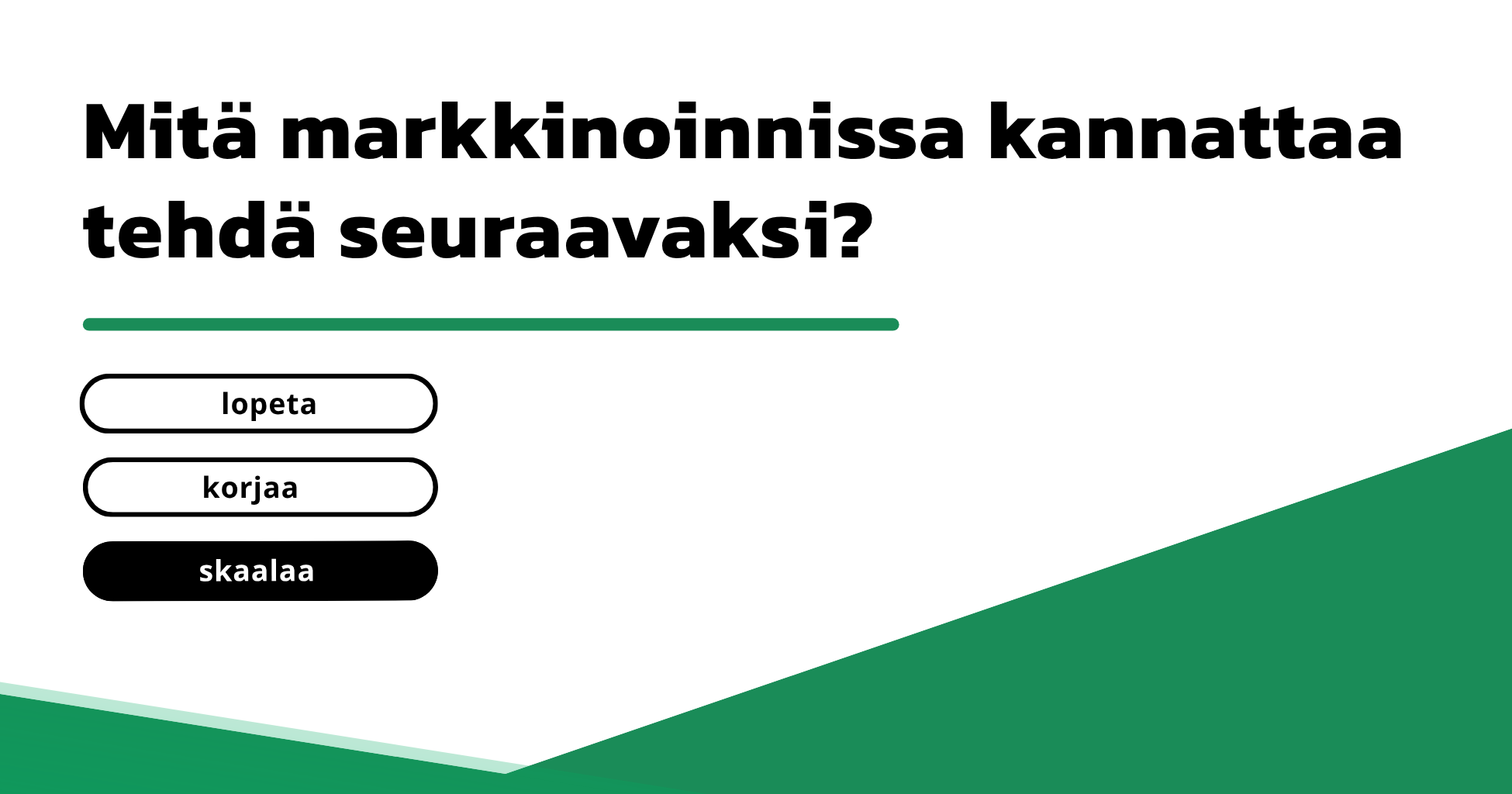
Data-driven decision-making comes down to three actions. When you look at the data, you should be able to divide marketing activities into three categories:
1. What should be stopped? Identify campaigns and channels that consume budget but do not produce qualified leads for sales. If a campaign has run long enough, brought in traffic, but produced zero sales-qualified leads, it is time to redirect budget to stronger channels.
2. What should be fixed? Find the bottlenecks. For example, an ad may get clicks and drive traffic to a landing page, but the conversion rate is close to zero. The problem is not the channel, but the landing page message or the ease of buying. Fix conversion points before sending more paid traffic there.
3. What should be scaled? When data shows that a specific piece of content, keyword, or campaign consistently produces high-lifetime-value customers at a profitable acquisition cost, accelerate it. Scaling is easier and safer when you know the ROI of the action.
Need an outside view on interpreting your numbers? Book a strategy meeting with our expert and we will look together at what is holding back your growth.
How does KAIO turn reporting into decision-making?
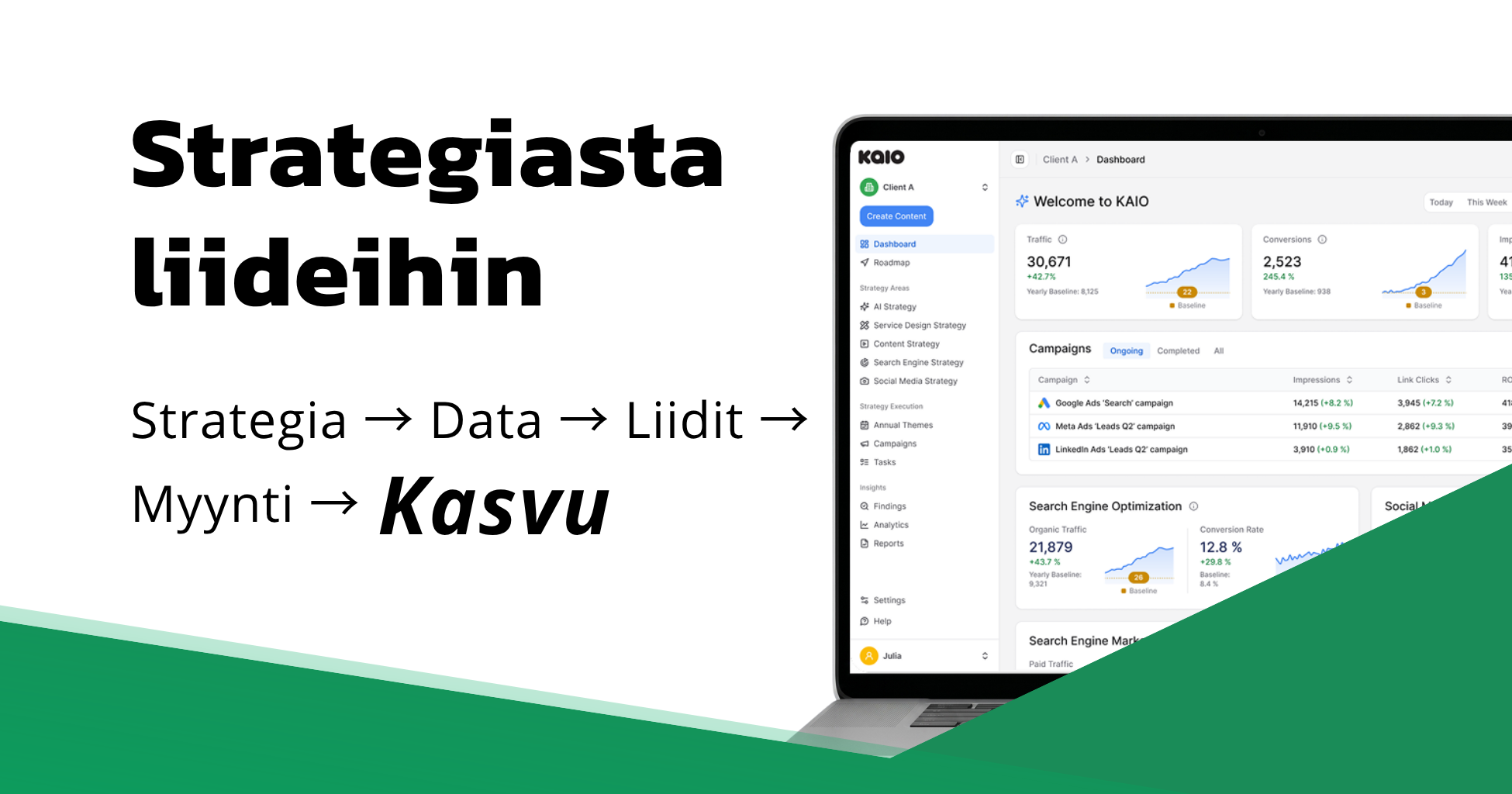
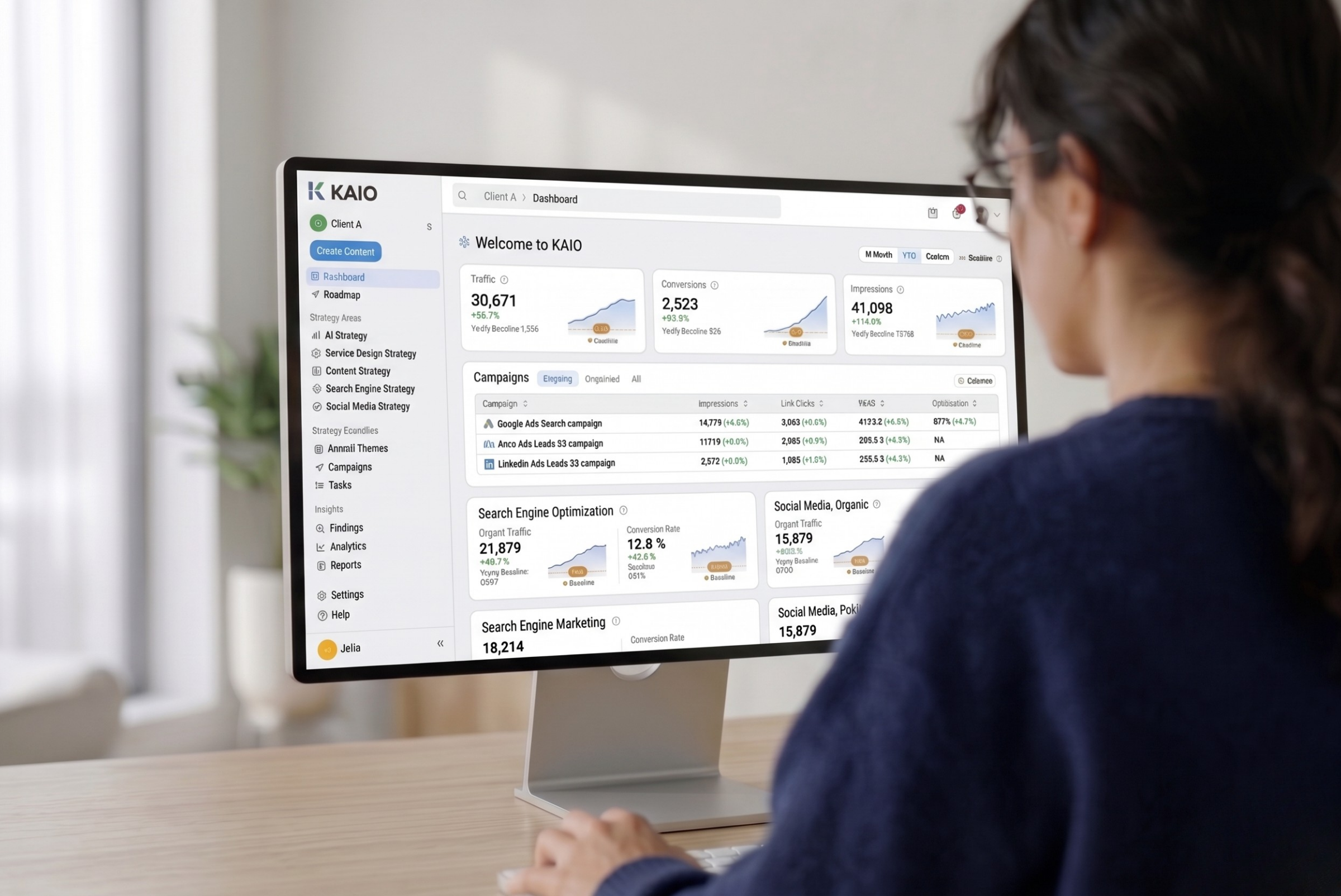
KAIO is an AI-based customer acquisition analysis and guidance solution. It is not just another dashboard showing past numbers. KAIO combines marketing and sales data into one view, analyzes it in real time, and – most importantly – gives clear recommendations on where to focus next.
With KAIO, you remove guesswork from marketing. You can see where the highest-quality leads come from, how budget should be allocated, and how to improve the profitability and productivity of customer acquisition. This turns data-driven marketing into a continuous operating model where every decision moves toward better growth.
Want to see where marketing should focus next?
Continue reading
AI-Guided Growth
How to build a working growth engine for your company
A growth engine brings target audience, value proposition, channels, content, conversions, sales, and metrics into one repeatable model.
AI-Guided Growth
How a Marketing Manager Justifies the Budget When Results Are Demanded Faster
Defending the marketing budget to leadership requires more than operational metrics. The right data transforms the budget conversation from cost control to investment discussion.
AI-Guided Growth
Speed Is the Advantage in Customer Acquisition - Why the Fastest Learner Wins the Market
In customer acquisition, speed is the advantage: the faster company spots buying signals earlier, fixes waste sooner, and turns what works into action before competitors.
Ready to Outpace the Market?
KAIO helps guide sales and marketing with data toward better results.