

Execution
Data-Driven Customer Acquisition: How Do You Know Which Marketing Actually Brings Customers?
Clicks and lead volume do not yet reveal which marketing grows sales. Data-driven customer acquisition connects marketing and sales data so decisions are based on what truly creates customers.

Many companies are highly active in marketing. Ads run on Google, Meta, and LinkedIn, content is produced for the website, and campaigns are continuously optimised. Yet one question often remains unclear: which marketing actually brings in new customers?
Traffic, clicks, or form submissions alone do not tell whether marketing creates real sales opportunities and revenue. Data-driven customer acquisition is built to answer that question.
Why are marketing results hard to understand?
Most companies have plenty of data, but it is scattered across different systems. Google Analytics shows website traffic, ad platforms report campaign results, and the CRM shows how leads move toward sales. If this information is not connected, the full picture is easy to miss.
As a result, marketing can be optimised against the wrong metrics. A campaign may look effective because it brings a lot of traffic or enquiries, even if none of those leads become customers.
Clicks do not yet mean customers
A click only tells you that someone reacted to an ad or a piece of content. It does not tell you whether the visitor was in the right target audience or whether there was real buying intent.
Especially in B2B marketing, the customer journey is often long. A customer may see several ads, read content, and return to the website many times before contacting sales. That is why marketing impact should not be judged only by clicks or lead volume.
What does data-driven customer acquisition mean?
Data-driven customer acquisition means that marketing and sales decisions are made from shared data. The goal is not to add more reporting, but to understand which channels, campaigns, and messages produce real customers.
When data is connected correctly, the company can identify where the customer journey works and where it leaks. At the same time, it becomes clearer what to improve, what to stop, and where the marketing budget should be allocated.
What should be measured in customer acquisition?
Traffic or lead volume alone is not enough. What matters most is understanding how visitors move toward becoming customers.
A company should be able to see whether marketing reaches the right audience, whether that audience responds to the message, and whether leads turn into real sales opportunities. Ultimately, the most important question is which actions lead to customers and revenue.
Why is conversion tracking alone not enough?
Conversion tracking is an important foundation, but on its own it does not reveal the true value of marketing. Two campaigns can look completely different depending on which metric is being reviewed.
One campaign may generate many cheap leads that never progress to sales. Another may generate fewer enquiries but more actual customers. If only lead volume is considered, the first campaign looks better, even though the second is far more valuable for the business.
That is why the quality of leads matters more than the quantity.
Not all traffic is equally valuable
One marketing channel may bring many clicks but weak leads. Another channel may cost more, but produce better sales conversations and more valuable customers.
That is why marketing should not be evaluated only by traffic or cost per click. It is more important to understand which marketing creates profitable growth.
Often the biggest problem is not the channel, but the message
Many companies look for growth in new channels, even though the real problem is the message. If buyers do not understand the value of the solution or why it matters to them, changing channels rarely solves the issue.
That is why a working message is often more important than any single ad platform. Once a company identifies a message that resonates with the right customers, it should be used broadly across marketing, the website, and sales.
Data helps make better decisions
The biggest benefit of data-driven customer acquisition is that decisions can be made from knowledge instead of guesswork. When a company sees what works and what does not, marketing can be improved much more effectively.
The goal is not to do more of everything, but to focus on the actions that create real customers.
Summary
Data-driven customer acquisition helps reveal which marketing actually brings customers. Traffic, clicks, or lead volume alone do not show marketing’s real impact. Visibility is needed across the whole customer journey, from first touchpoint to sales.
When marketing and sales look at the same data, the company can make better decisions and allocate resources more effectively toward profitable growth.
Want to see where your new customers actually come from?
Book a free KAIO analysis and find out how to develop your customer acquisition with data.
Continue reading
Execution
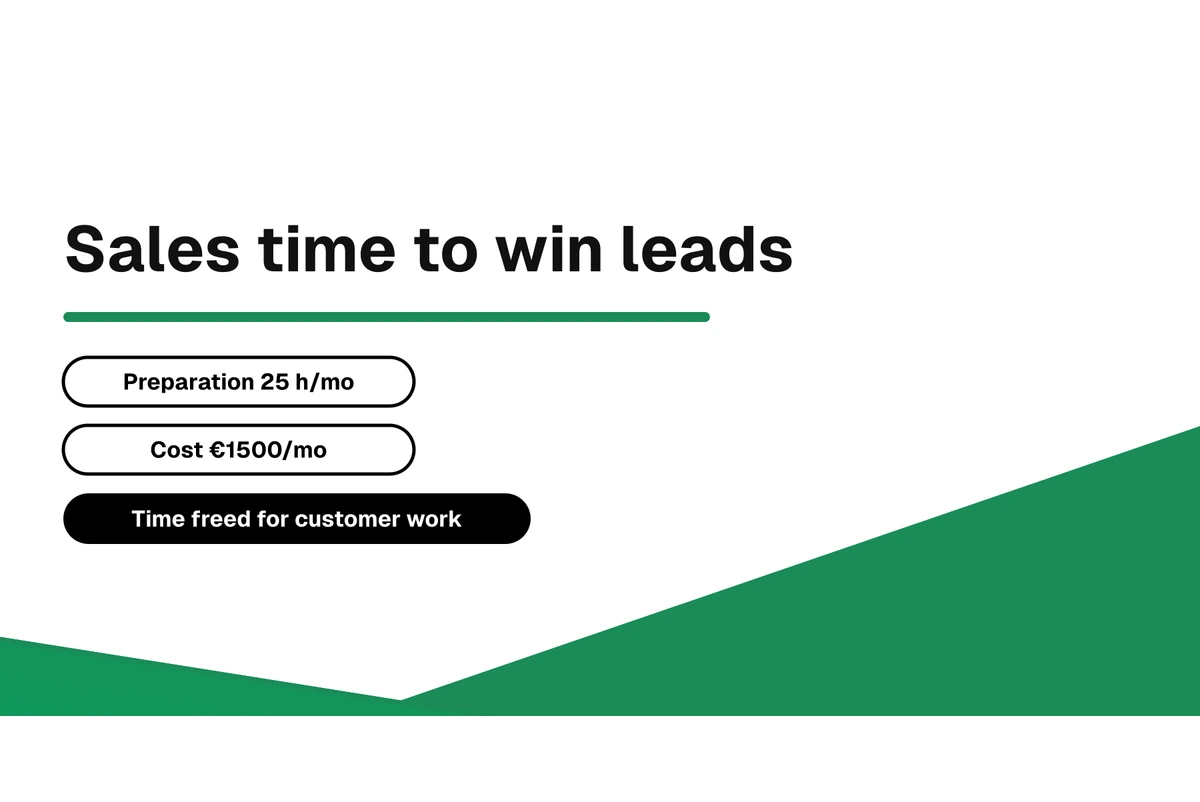
Sales time should be spent winning leads – not researching them
Manual lead preparation drains sales capacity and weakens CRM data. Here is how to calculate the cost of that wasted work and free up time for customer conversations.
Execution
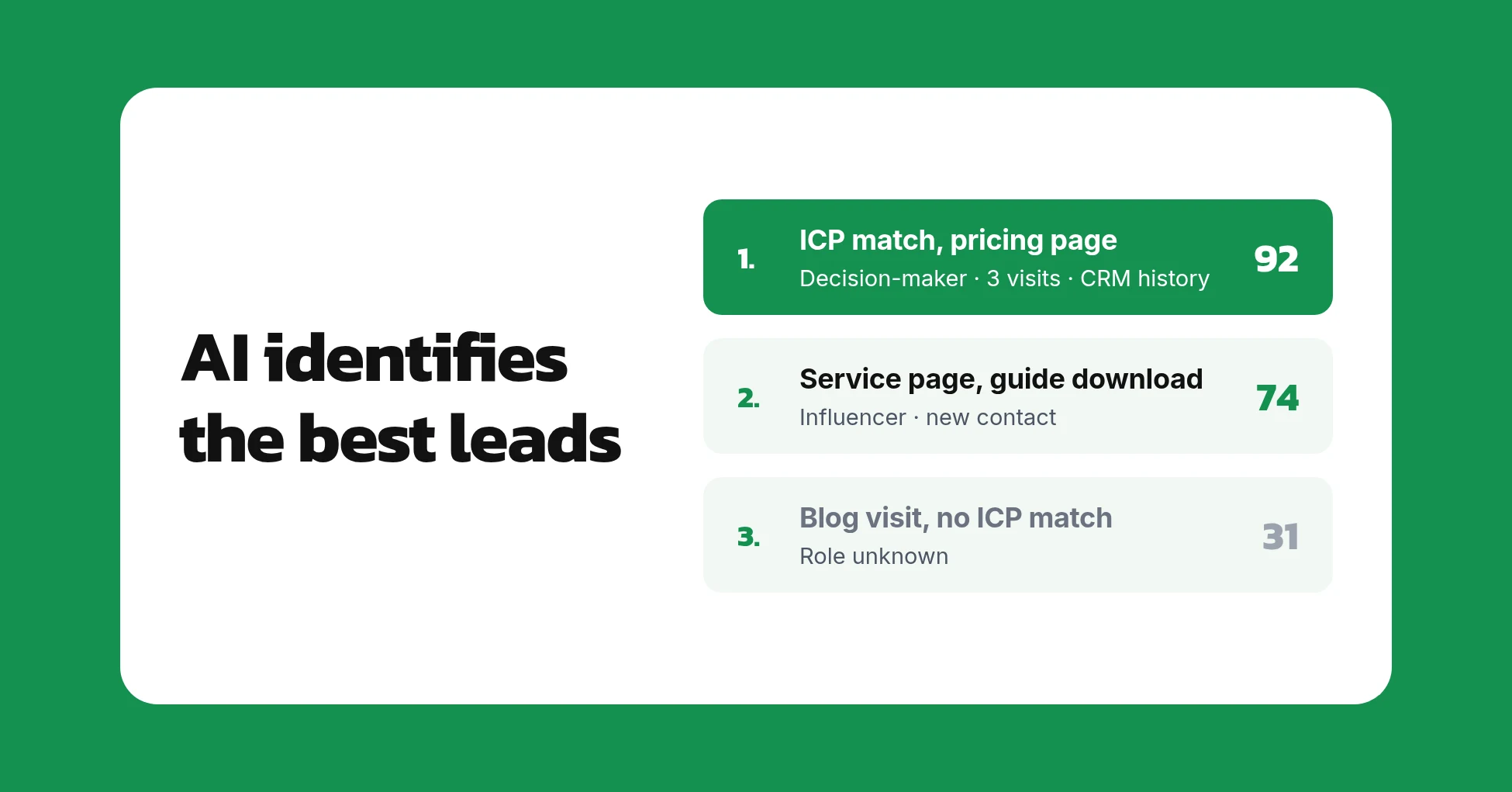
How does AI help sales identify the best leads before the first contact?
AI compiles lead data, identifies signals based on agreed criteria and proposes a justified handling order – so sellers start every conversation prepared.
Execution
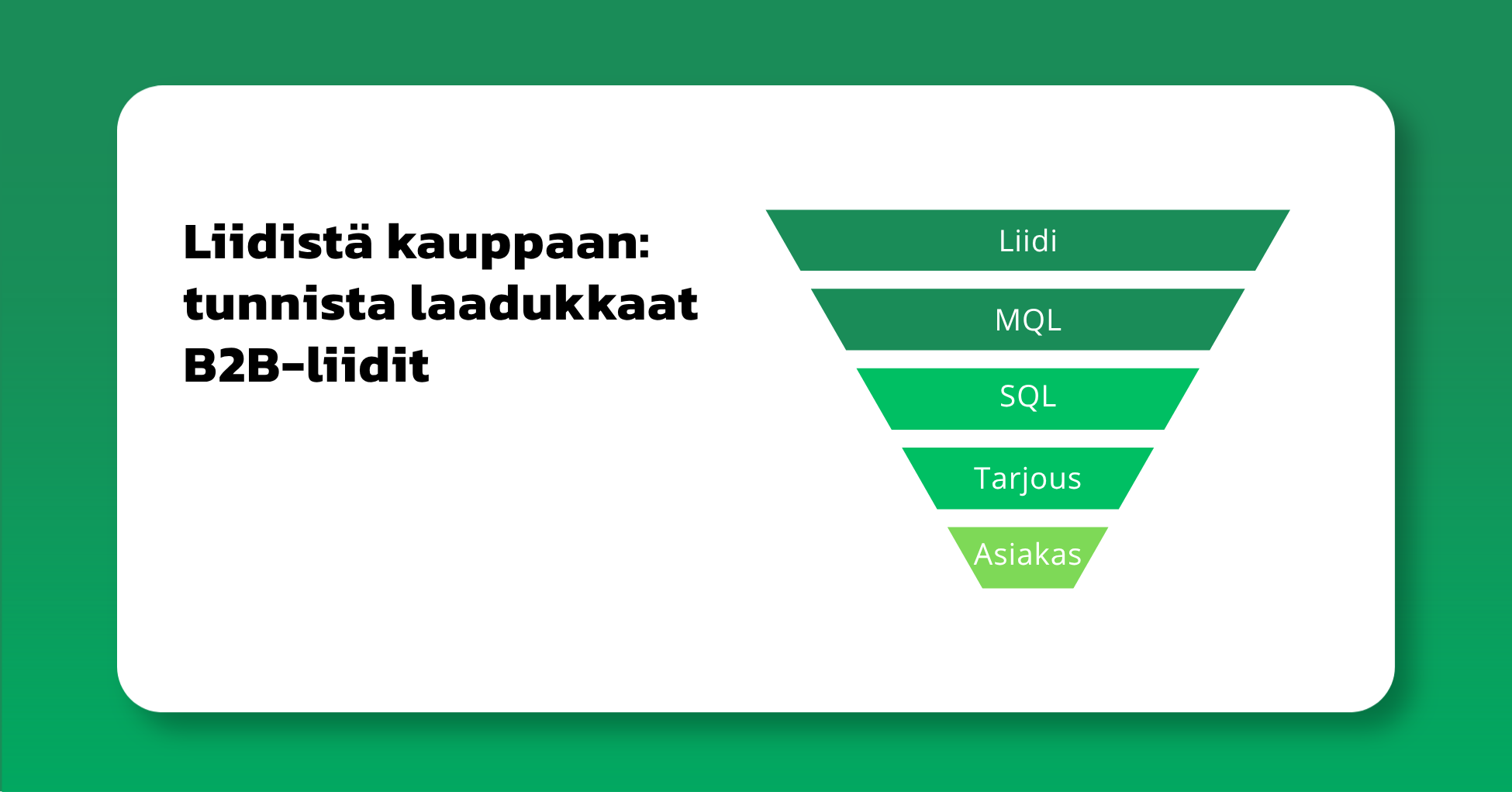
Why lead volume alone is not enough – how to identify high-quality B2B leads
Lead quality determines whether marketing creates real sales opportunities or simply fills the pipeline with the wrong contacts.
Ready to Outpace the Market?
KAIO helps guide sales and marketing with data toward better results.