

AI-Guided Growth
How a Marketing Manager Justifies the Budget When Results Are Demanded Faster
Defending the marketing budget to leadership requires more than operational metrics. The right data transforms the budget conversation from cost control to investment discussion.
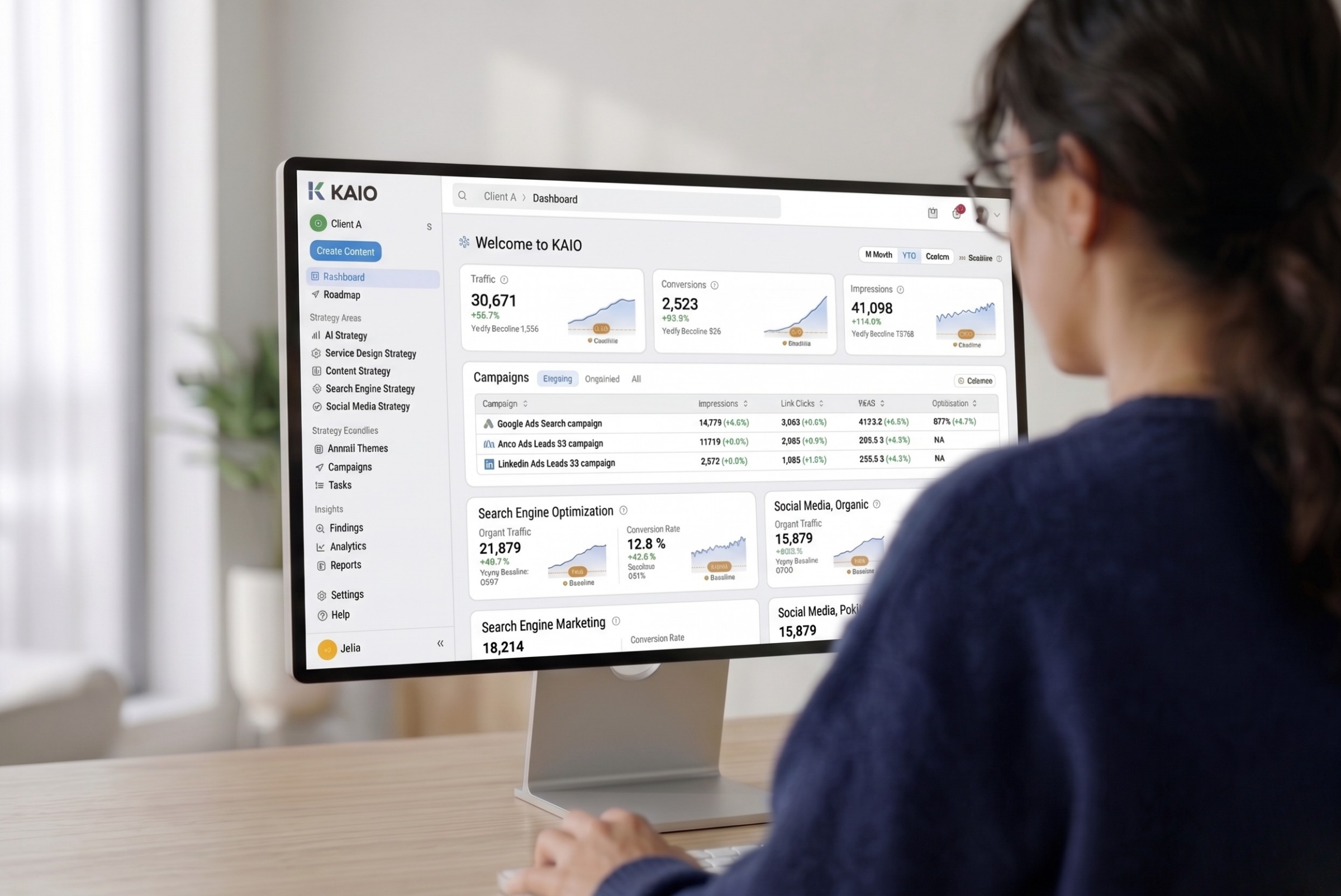
A marketing manager's daily work is often a balancing act between pressure and possibilities. The leadership team and CEO demand results faster and clearer proof that the euros invested in marketing produce real bottom-line value. At the same time, the marketing landscape is fragmenting, customer journeys are growing more complex, and data collection is becoming harder.
When a budget review approaches or marketing resources are questioned, trust in the work alone is no longer enough. The budget must be justified with hard data. But what kind of data?
Clicks, impressions, and lead counts are not enough for the leadership team
Many marketers fall into the trap of reporting the wrong things to leadership. While click-through rates (CTR), impressions, website traffic, and even cost per lead (CPL) are important operational metrics for optimising marketing, they do not speak the language of leadership.
The leadership team cares about growth, profitability, and risk management.
If you are reporting only lead volume and a low CPL, you are on dangerous ground. A hundred cheap leads that none convert into deals is nothing but a cost to the business and a waste of sales time. The real value of marketing is measured by how effectively it produces quality opportunities for sales that lead to closed deals and long-term customers.
That is why budget justification requires qualitative and financial data alongside surface metrics. When you can show how many leads progress to meetings, how many of those opportunities ultimately convert to deals, what the average customer value is, and how quickly the money spent on acquisition pays itself back, the conversation changes fundamentally. It is equally important to understand whether a customer generates sufficient value over the long term relative to the cost of acquiring them. With these numbers, marketing no longer appears as a cost line to be cut, but as an investment whose return can be evaluated, predicted, and grown systematically.
How to justify the marketing budget with data
To defend your budget and demand additional investment in growth, you need to shift from looking in the rear-view mirror (reporting) to looking through the windshield (proactive guidance).
1. Connect marketing and sales data
You need to be able to follow the customer journey from the first click all the way to a won deal. When you know exactly which sources produce the best and longest-retaining customers, you can justify shifting the budget to those channels.
2. Talk about customer lifetime value (LTV) and acquisition cost (CAC)
When you can show that acquiring one new customer costs, say, €2,000, but the value they bring to the business is €15,000 per year, the budget conversation shifts from cost control to investment discussion.
3. Build a real-time view of activity
Leadership does not want to wait for a static end-of-month report. They want to know where things stand today.
Predictability and profitability through real-time guidance
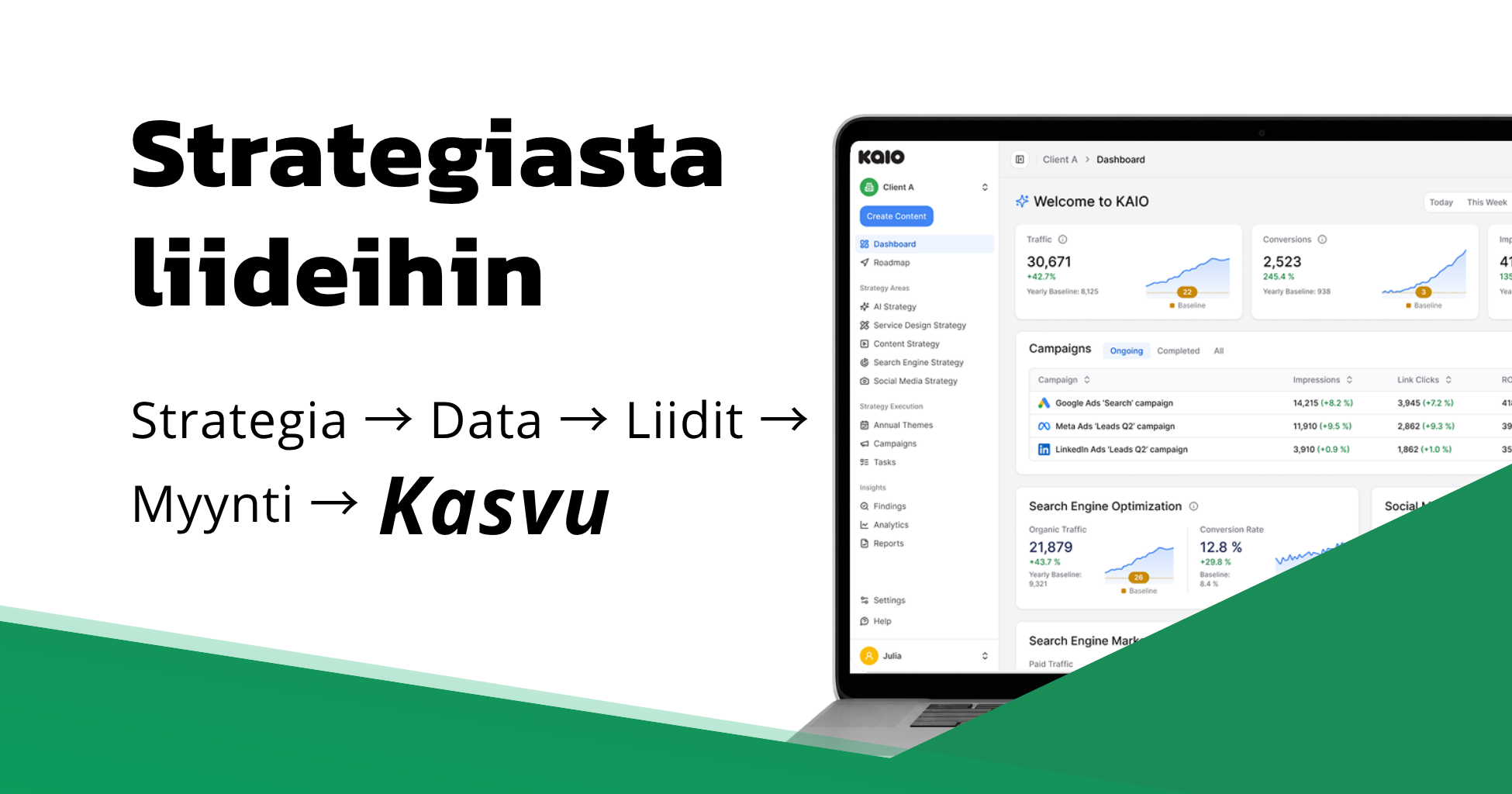
At KAIO, we believe that a marketing manager should not have to guess. We have developed an AI-powered customer acquisition solution that does exactly what leadership demands: it connects marketing and customer acquisition data, identifies what actually generates new customers, and steers actions toward better profitability.
We do not just offer a new reporting tool, but a decision-making engine. When you can see in real time from a single dashboard where the marketing budget should be allocated next, justifying the budget becomes easy.
Want to see how your company's customer acquisition data can support growth and profitability?
Do a free KAIO analysis or book a demo.
Continue reading
AI-Guided Growth
Data-driven decision-making in marketing – how do you decide what to do next?
Turn fragmented marketing data into clear priorities: what to stop, what to fix, and what to scale next.

AI-Guided Growth
How to build a working growth engine for your company
A growth engine brings target audience, value proposition, channels, content, conversions, sales, and metrics into one repeatable model.
AI-Guided Growth
Speed Is the Advantage in Customer Acquisition - Why the Fastest Learner Wins the Market
In customer acquisition, speed is the advantage: the faster company spots buying signals earlier, fixes waste sooner, and turns what works into action before competitors.

Ready to Outpace the Market?
KAIO helps guide sales and marketing with data toward better results.