

Execution
Sales time should be spent winning leads – not researching them
Manual lead preparation drains sales capacity and weakens CRM data. Here is how to calculate the cost of that wasted work and free up time for customer conversations.
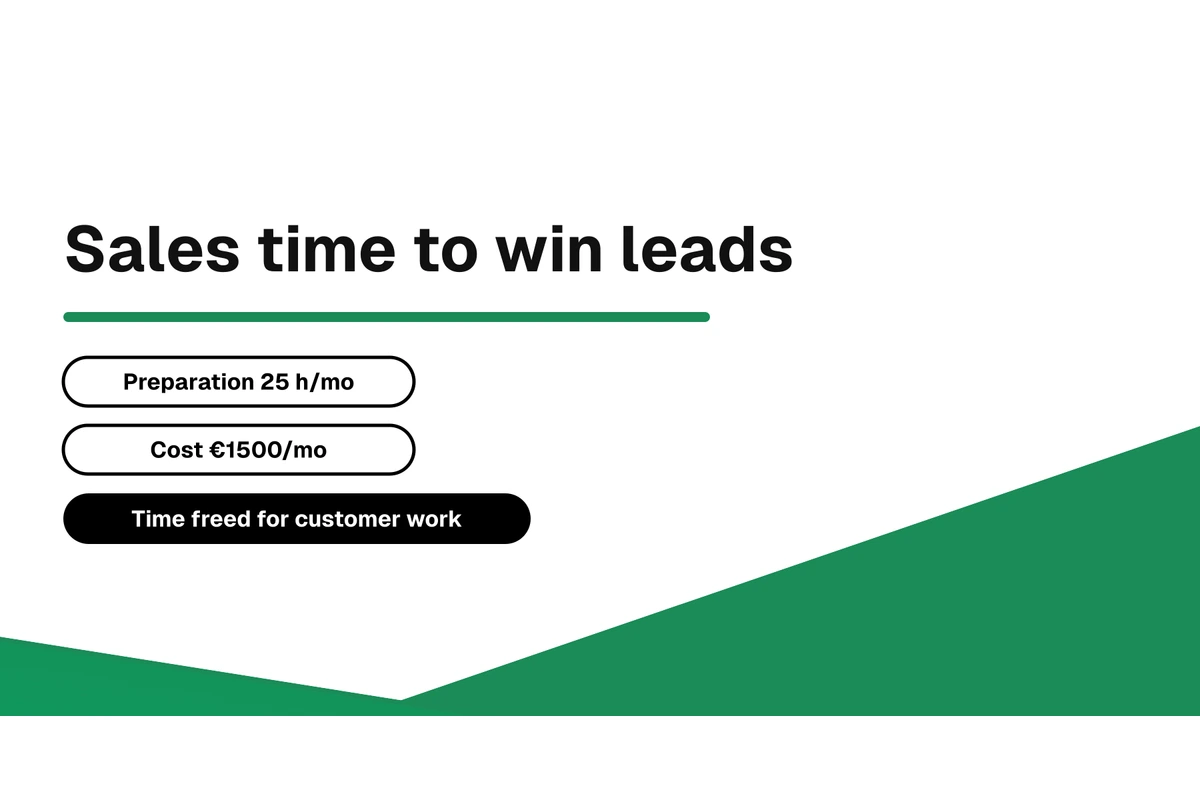
A salesperson’s working time is expensive, yet it is still spent searching for company information, moving form responses between systems and researching lead backgrounds. Individual tasks take only minutes, but across dozens of leads and several salespeople they add up to a significant amount of invisible wasted work.
B2B sales productivity improves when the essential information reaches the salesperson at the right time. Sales time should not be spent researching leads, but winning them.
Wasted work begins the moment a lead arrives
When a new lead arrives, the salesperson often has to look up the company and contact background, figure out the marketing source and piece together form responses, notes and previous contacts. At the same time they update CRM data and assess lead quality on the basis of fragmented information.
AI can save the salesperson’s time by compiling the essential lead data from predefined data sources, analysing it against the company’s own criteria and producing a concise summary for the salesperson. Through integrations, the data can also be written directly into the agreed CRM fields.
AI does not replace the salesperson or make the final commercial decisions. It removes low-value preparation work so the salesperson can focus on the customer’s situation.
Wasted sales work drains capacity and weakens management
Manual lead handling weakens sales capacity, response speed, CRM data quality and the manageability of the sales process. Time spent on background work is time away from customer conversations, proposals and advancing deals.
Incomplete or scattered CRM data makes pipeline visibility, forecasting and resource allocation harder. Marketing development also suffers if information about lead quality and sales results does not flow back to marketing. In that case it is hard to identify where high-quality B2B leads come from.
It is worth making wasted work visible as a cost and as lost capacity. This allows a clear target to be set for automation: how much time is freed up and where it is used.
A model for calculating time savings
The price tag of manual work is easy to break down. You can apply the following simple formula to your own organisation:
Number of leads per month × time spent on manual preparation × the seller’s hourly cost = current preparation cost.
An illustrative scenario: A company receives 100 leads per month. On average, sellers spend 15 minutes researching a single lead’s background, copying data and making CRM entries. The seller’s internal hourly cost is €60.
- 100 leads × 0.25 h = 25 hours of wasted work per month.
- Cost: 25 h × €60 = €1,500 / month (€18,000 per year).
The calculation shows the direct cost of the work, but for sales leadership the more important question is capacity. What could sales achieve if a larger share of those 25 hours were spent on active customer conversations and advancing deals?
KAIO can reduce the time spent on lead preparation and CRM entry by compiling the data in advance, analysing its relevance and moving it into the CRM according to the integrations in use. The actual time saved depends on the current process, the data sources and the scope of the automation.
It is worth tracking the impact with practical metrics: time spent on preparation, speed of first contact, capacity freed up for customer work, coverage of CRM data and the progression of sales opportunities. This way the value of automation can be assessed through business results.
What does sales leadership gain?
When manual data gathering decreases, sales leadership gains more capacity and higher-quality data. KAIO helps sales leadership reach four key goals:
- More time for customer work: The salesperson can focus on the customer’s situation and advancing the deal.
- Faster and more consistent handling: Pre-structured information and shared criteria shorten preparation.
- Higher-quality CRM data: Writing data into the correct fields improves pipeline visibility.
- A closer link between marketing and sales: The organisation gets sales and marketing data in the same view.
The real benefit only emerges when the freed-up time is spent on customer conversations, advancing sales opportunities and winning deals.
How does KAIO act as a sales preparer?
KAIO compiles, structures and analyses information before the salesperson’s own assessment. It can combine marketing source data and sales results, evaluate how well a lead fits the criteria the company has defined and identify predefined buying signals.
KAIO can produce a summary for preparation, write data into agreed CRM fields and pass sales result information back to support marketing. The salesperson retains responsibility for checking the data, interpreting the customer situation and making commercial decisions.
How much of your sales time goes to researching leads?
Run a free KAIO analysis or book a demo. Find out how much capacity lead handling consumes and how KAIO can reduce manual preparation.
Continue reading
Execution
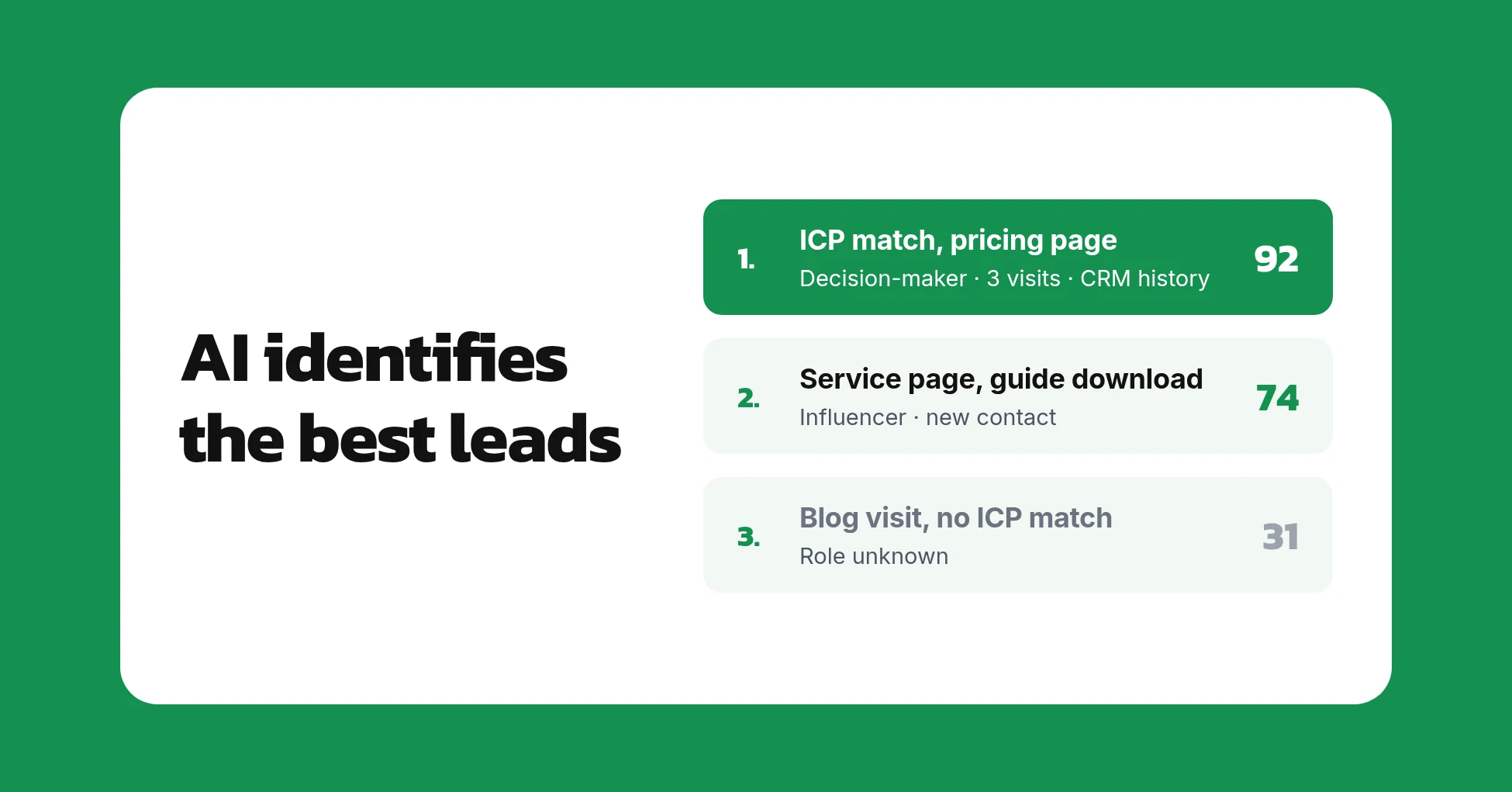
How does AI help sales identify the best leads before the first contact?
AI compiles lead data, identifies signals based on agreed criteria and proposes a justified handling order – so sellers start every conversation prepared.
Execution
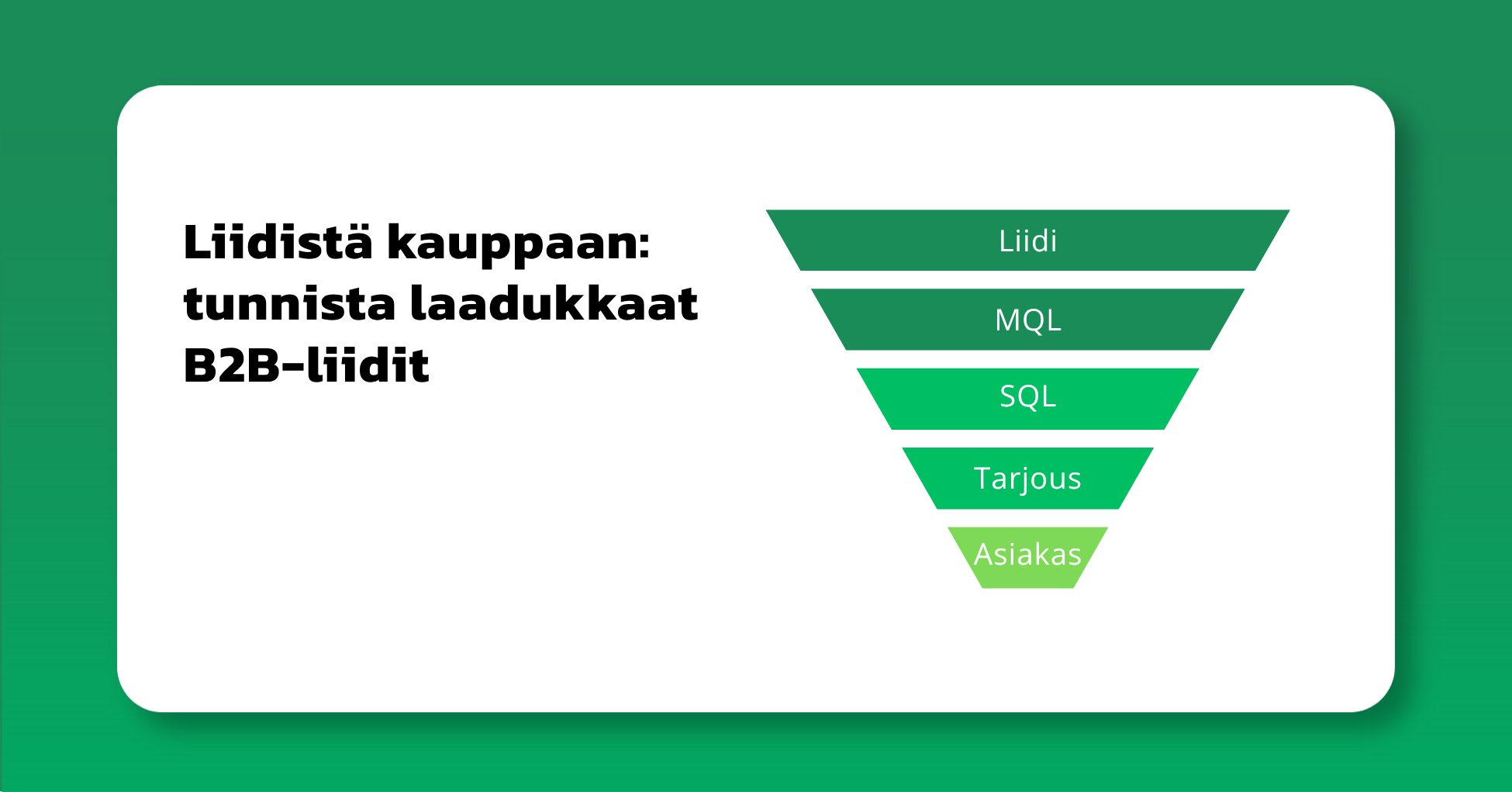
Why lead volume alone is not enough – how to identify high-quality B2B leads
Lead quality determines whether marketing creates real sales opportunities or simply fills the pipeline with the wrong contacts.
Execution
Marketing data to support sales – what should a B2B company measure?
The right metrics reveal whether marketing supports sales or only collects clicks, traffic, and contacts without commercial quality.
Ready to Outpace the Market?
KAIO helps guide sales and marketing with data toward better results.