

Execution
Why lead volume alone is not enough – how to identify high-quality B2B leads
Lead quality determines whether marketing creates real sales opportunities or simply fills the pipeline with the wrong contacts.
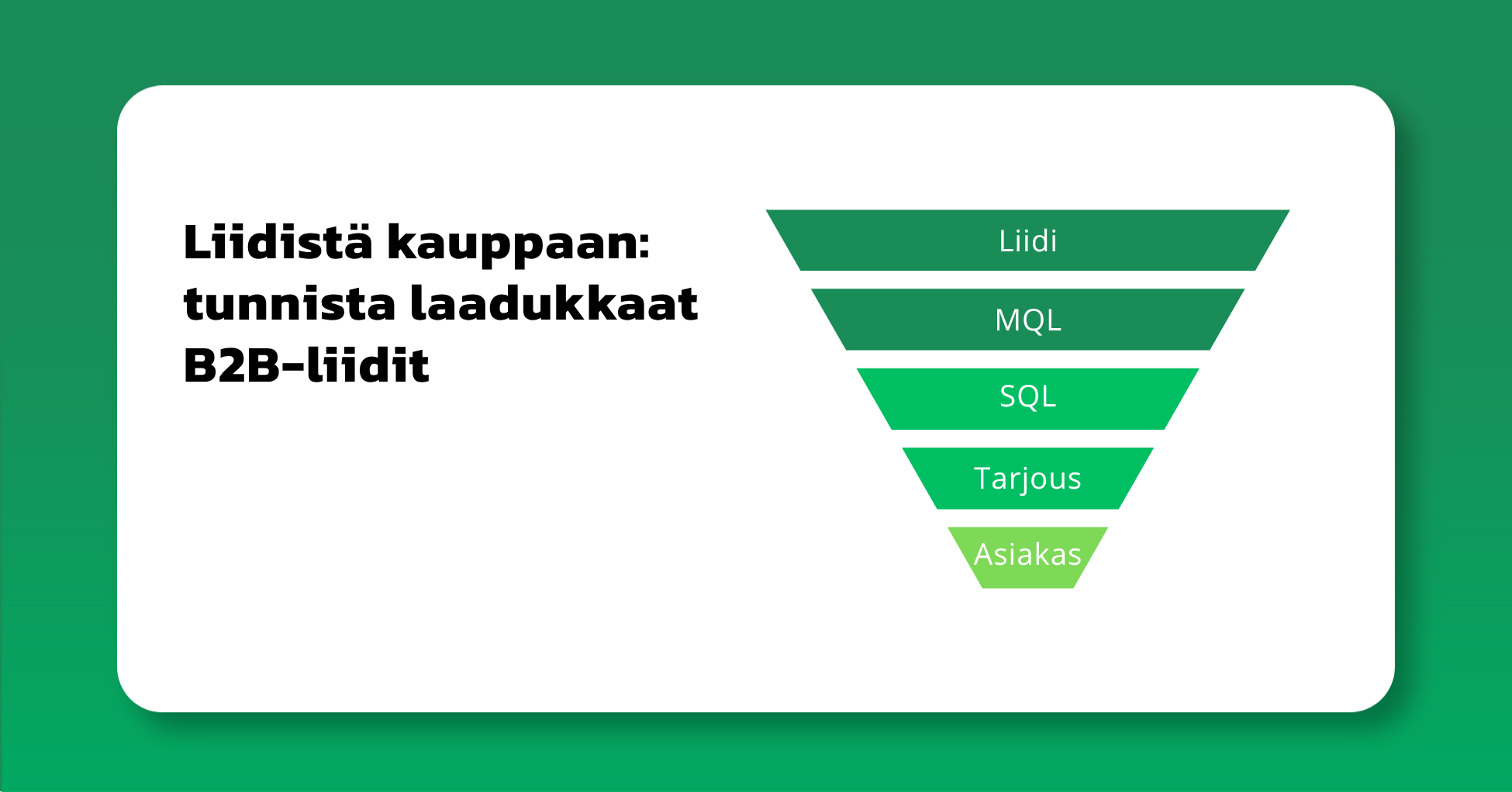
Marketing celebrates a record number of website conversions, while the sales team gets frustrated because the enquiries do not lead to results. For many B2B companies, this is a familiar growth blocker.
In customer acquisition, it is easy to become blinded by volume. Real growth and profitability only begin when one critical fact is understood: not all B2B leads are equally valuable. The goal should never be to maximize contact volume, but to identify sales opportunities that actually become paying customers.
Where do high-quality leads come from, and how can marketing budget be directed to the channels that produce results?
1. Why can lead volume be misleading?
B2B lead generation is often tuned to produce as many contacts as possible as cheaply as possible. If marketing is measured only by conversion rate or low cost per lead, the system inevitably starts optimizing toward quantity, not quality.
One hundred weak leads are a much more expensive problem than ten good ones. Poor leads consume valuable sales time, distort pipeline predictability, and weaken the overall profitability of customer acquisition. That is why looking only at volume often leads to wrong decisions about where marketing resources should be invested next.
2. What is a high-quality B2B lead?
High-quality leads are not random. They closely match your ideal customer profile. A high-quality lead is a company with an identified business problem that your service can solve, as well as the readiness and budget to make decisions.
It is important to understand the difference between MQL and SQL leads:
- MQL (Marketing Qualified Lead): A lead qualified by marketing that has shown interest, for example by downloading a guide or joining a webinar.
- SQL (Sales Qualified Lead): A lead qualified by sales that has been assessed as a real sales opportunity and moves into an active sales process.
Lead quality is measured by how many MQLs become SQLs and eventually deals. A high-quality B2B lead is one that shortens the sales cycle and increases customer lifetime value.
3. How can lead quality be identified?
To know where the best customers come from, you need to examine the customer journey from the first click to the enquiry and evaluate which sources produce the best conversations from sales' point of view. The problem is that traditional marketing reporting tools often show only which channel produced the last conversion.
True quality identification requires deeper data-driven visibility. You need to see:
- Which keywords, campaigns, or content bring decision-makers to the site who best match your ideal customer profile?
- Which actions produce only empty clicks and unqualified interest?
- What is the cost of each marketing channel relative to high-quality leads?
When data is transparent and lead quality is evaluated systematically, budget can be moved confidently to actions known to produce high-quality sales opportunities. KAIO helps identify which sources, keywords, and campaigns create the best conditions for high-quality customer acquisition.
4. How can lead quality be evaluated?
One of the biggest reasons for poor lead quality is that marketing and sales do not share a clear enough definition of what makes a lead valuable. Marketing may optimize campaigns based on form submissions, while sales sees that some enquiries are not suitable or have too little buying potential.
Improving quality does not require a heavy integration project. Often, a good start comes from clear criteria, regular feedback, and careful review of campaign data.
In practice, this means:
- Clear lead criteria: Define together what kind of company, role, need, budget, and timeline make a lead high-quality.
- Sales feedback: Sales can evaluate leads weekly or monthly with a simple scale: good, average, or weak.
- Campaign and form data review: Compare which campaigns, keywords, landing pages, and forms produce the leads rated highest.
- Lead source comparison: Do not look only at lead count; compare sources by quality, fit, and sales progress.
- Regular shared review: Marketing and sales should review results together on a fixed rhythm so campaigns can be improved based on observations.
When feedback is collected consistently and compared with marketing campaign data, the company quickly learns which channels and content bring the most potential customers.
Want to stop guessing and see where your highest-quality leads really come from?
Continue reading
Execution
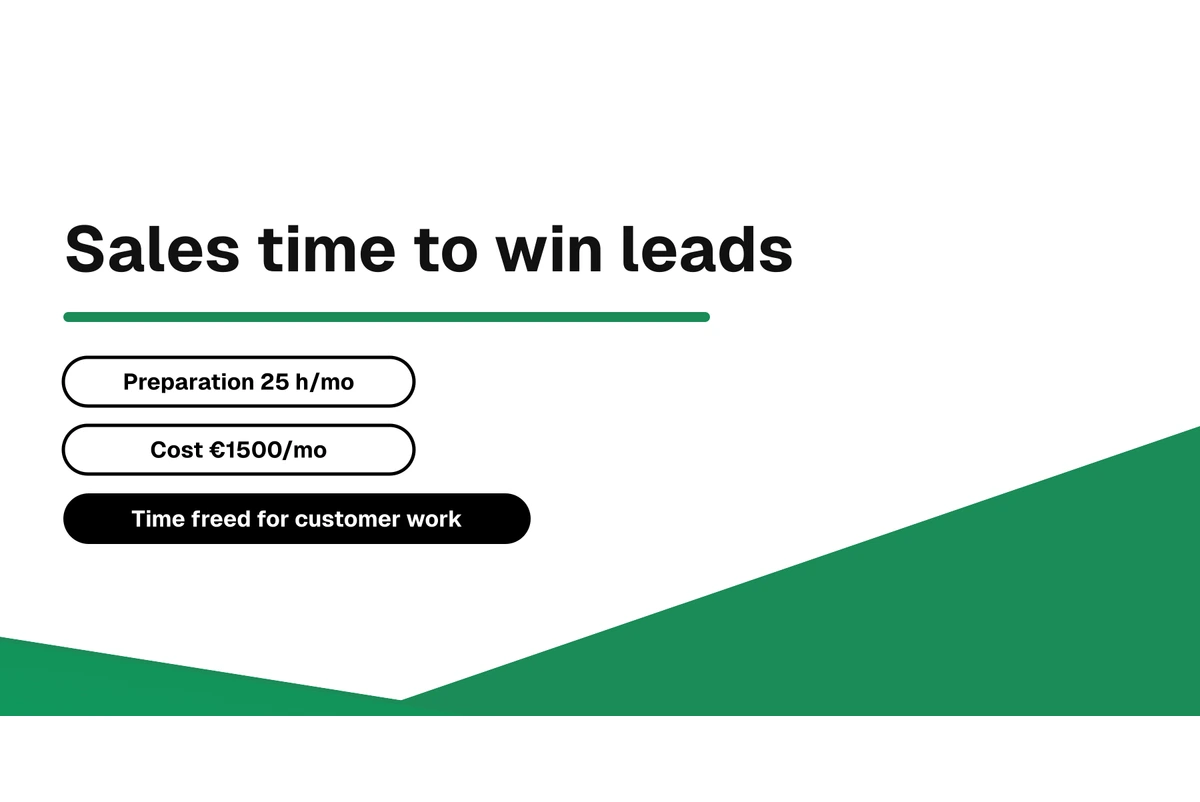
Sales time should be spent winning leads – not researching them
Manual lead preparation drains sales capacity and weakens CRM data. Here is how to calculate the cost of that wasted work and free up time for customer conversations.
Execution
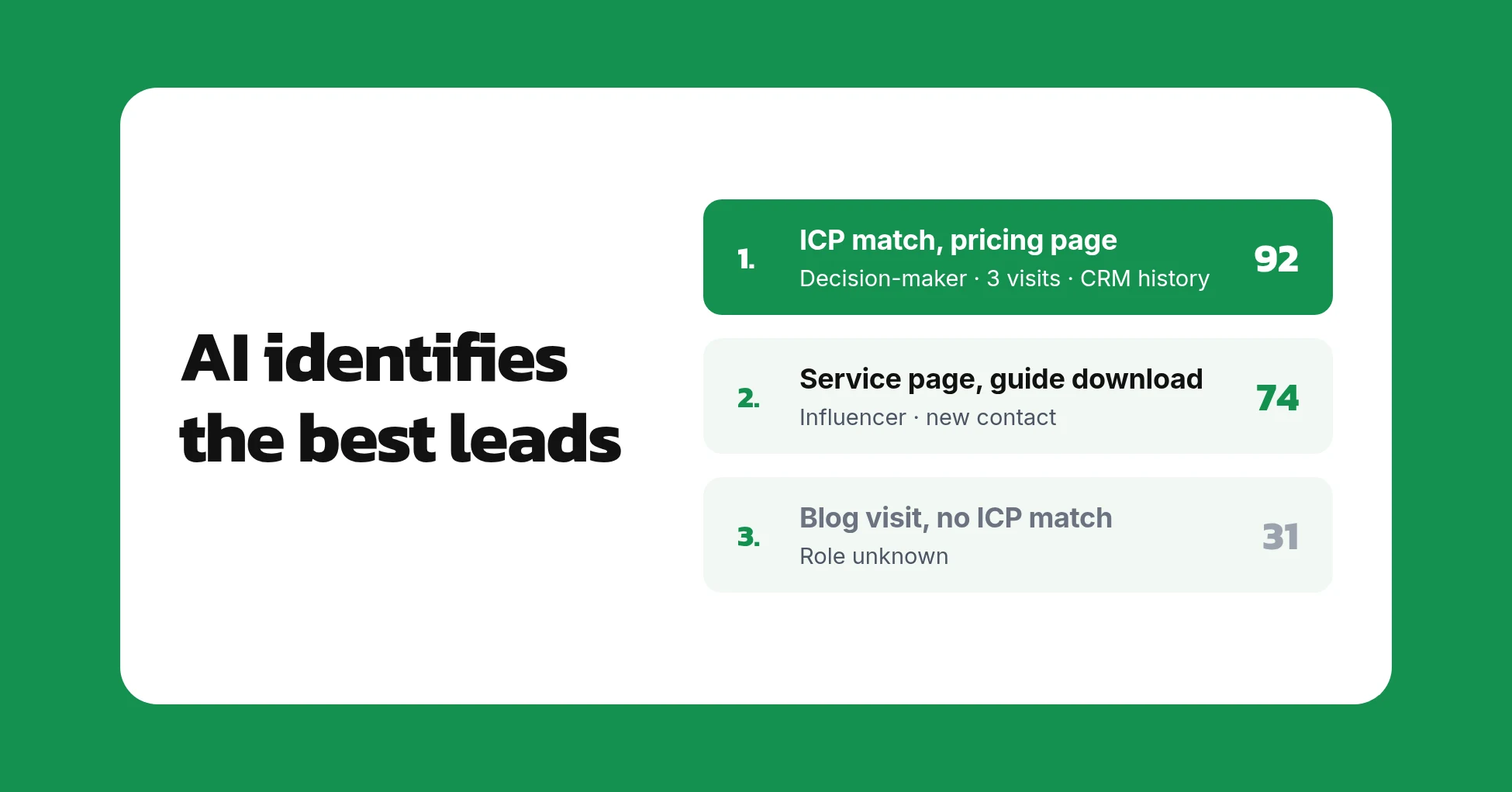
How does AI help sales identify the best leads before the first contact?
AI compiles lead data, identifies signals based on agreed criteria and proposes a justified handling order – so sellers start every conversation prepared.
Execution
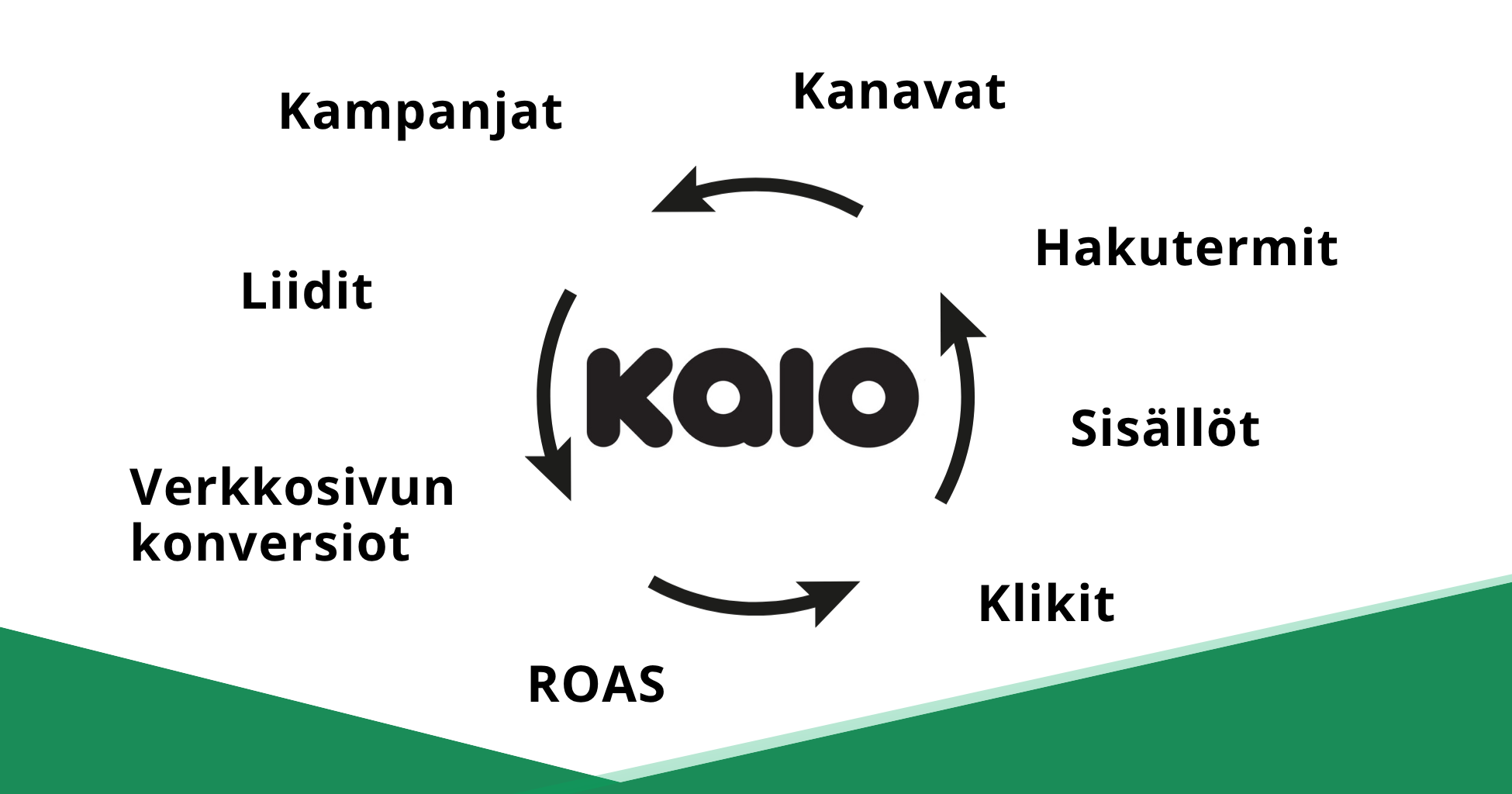
Marketing data to support sales – what should a B2B company measure?
The right metrics reveal whether marketing supports sales or only collects clicks, traffic, and contacts without commercial quality.
Ready to Outpace the Market?
KAIO helps guide sales and marketing with data toward better results.