

Execution
How to Build a Data-Driven Customer Acquisition System
Most companies do marketing, but few can answer one simple question: which action actually generates new customers? Data-driven customer acquisition transforms reactive activity into proactive guidance.
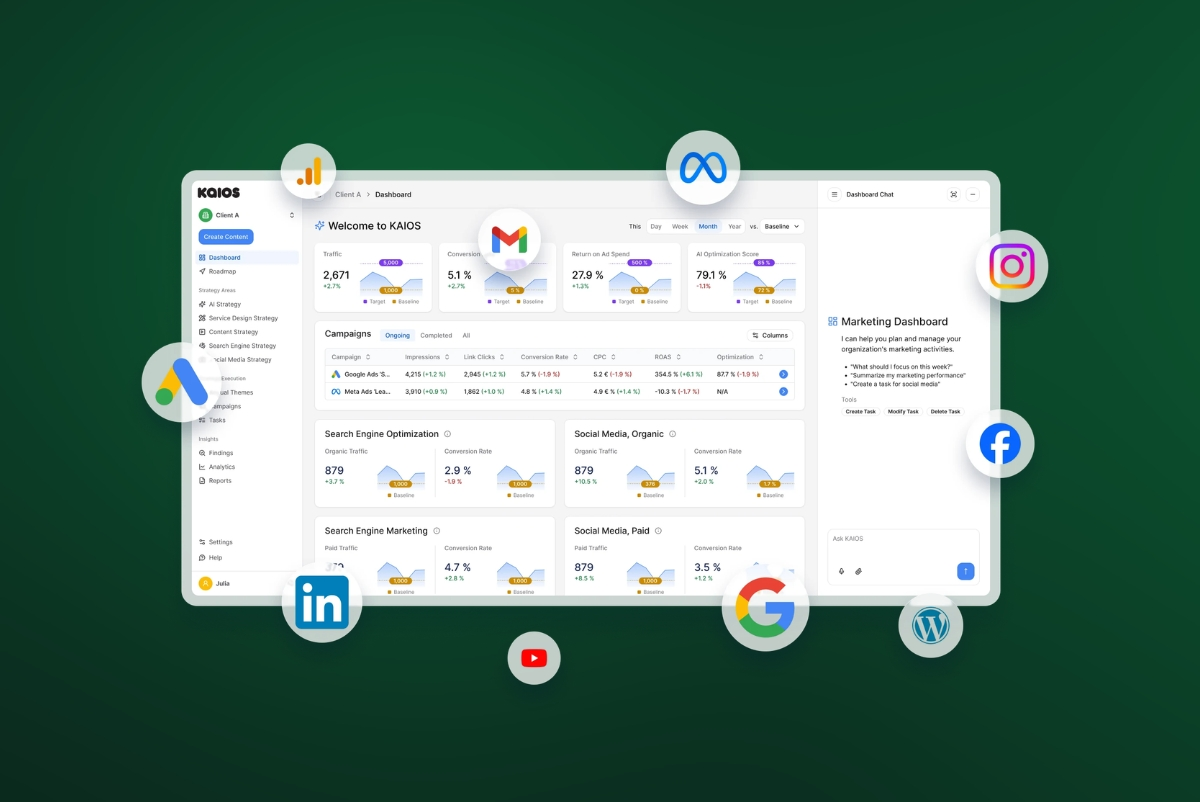
The 4 Stages of Data-Driven Customer Acquisition
A functional and scalable customer acquisition engine is built on four critical stages. If any one of them is missing, the whole system leaks.
- 1. Strategy: Where does growth actually come from – and is your plan up to date?
- 2. Actions: Do you know exactly what to do next and why that specific action?
- 3. Channels: Is your content and visibility actually converting into customers?
- 4. Guidance: Are you directing your marketing budget in real time based on what is working?
Most companies do marketing. But few can answer one simple question: which action actually generates new customers and bottom-line results? The problem is not a lack of effort or expertise. The problem is that customer acquisition is not being managed.
In most companies, customer acquisition is built in silos: marketing optimises campaigns, sales filters leads, and management looks at rear-view mirror reports. Data does not connect, systems do not talk to each other – and predicting business growth becomes impossible. Lots of activity happens, but nobody knows what is truly working.
KAIO is an AI-powered guidance system that unifies marketing, sales, and customer behaviour into one whole. It does not just show data – it tells you what to do next, why it is worth doing, and what concrete business impact it will have.
1. Strategy: A business plan based on data
Everything starts with strategy. But a traditional business plan is often a static document sitting in a drawer – it does not update even as market data changes. A data-driven strategy works differently: it is based on real, measurable performance, updates continuously, and guides operational activity directly.
2. Actions: You know exactly what to do next
Strategy without execution is wishful thinking. You need a clear view of what to do and in what order. An effective action plan prioritises activity purely by business impact, focuses on what matters, and eliminates manual work that adds no value.
3. Channels: Content and visibility that produces results
Actions are executed across chosen channels (Google, Meta, LinkedIn). But without clear direction, content remains disconnected, SEO does not support the whole, and visibility does not convert into customers. An effective model seamlessly combines intelligent content production, search visibility, and multi-channel distribution.
4. Guidance: Continuous optimisation based on data
This is the stage where most companies fail. Without continuous guidance, strategy quickly becomes outdated, actions fragment, and activity turns reactive. Guidance means knowing what is working right now, seeing where the greatest potential lies, and directing the marketing budget in real time.
Continue reading
Execution
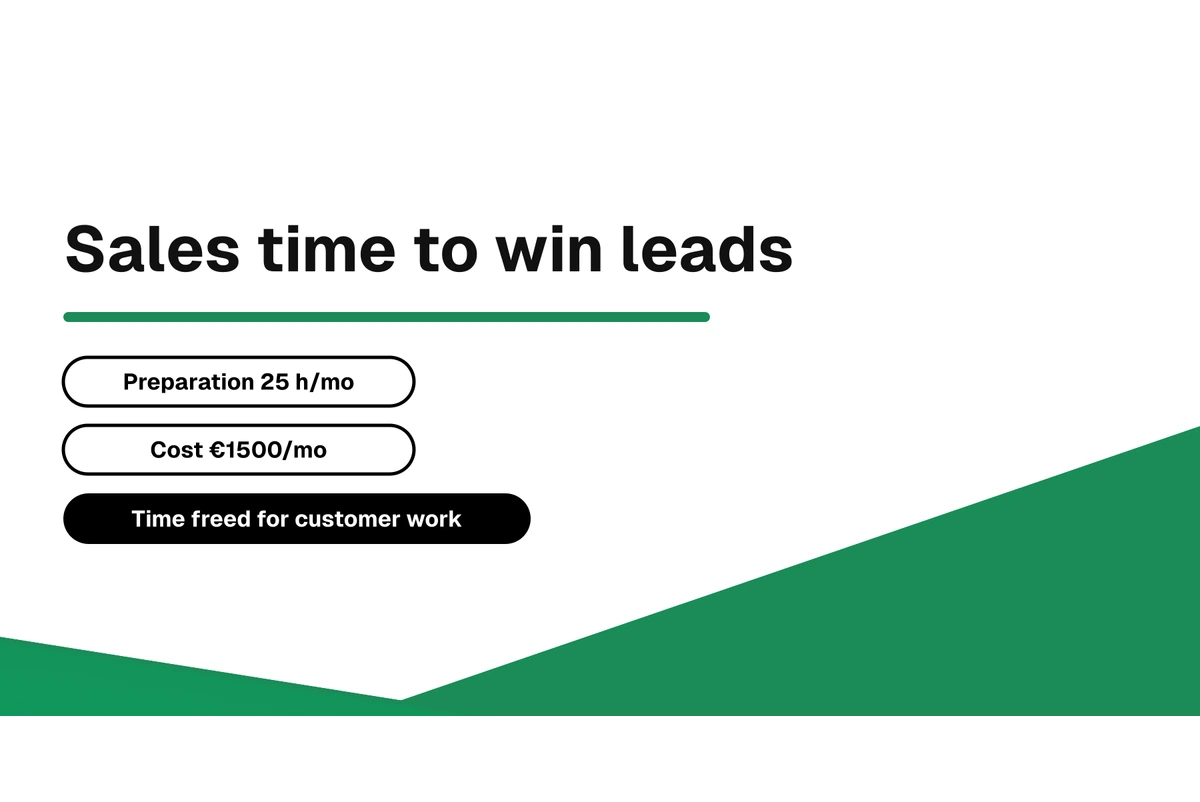
Sales time should be spent winning leads – not researching them
Manual lead preparation drains sales capacity and weakens CRM data. Here is how to calculate the cost of that wasted work and free up time for customer conversations.
Execution
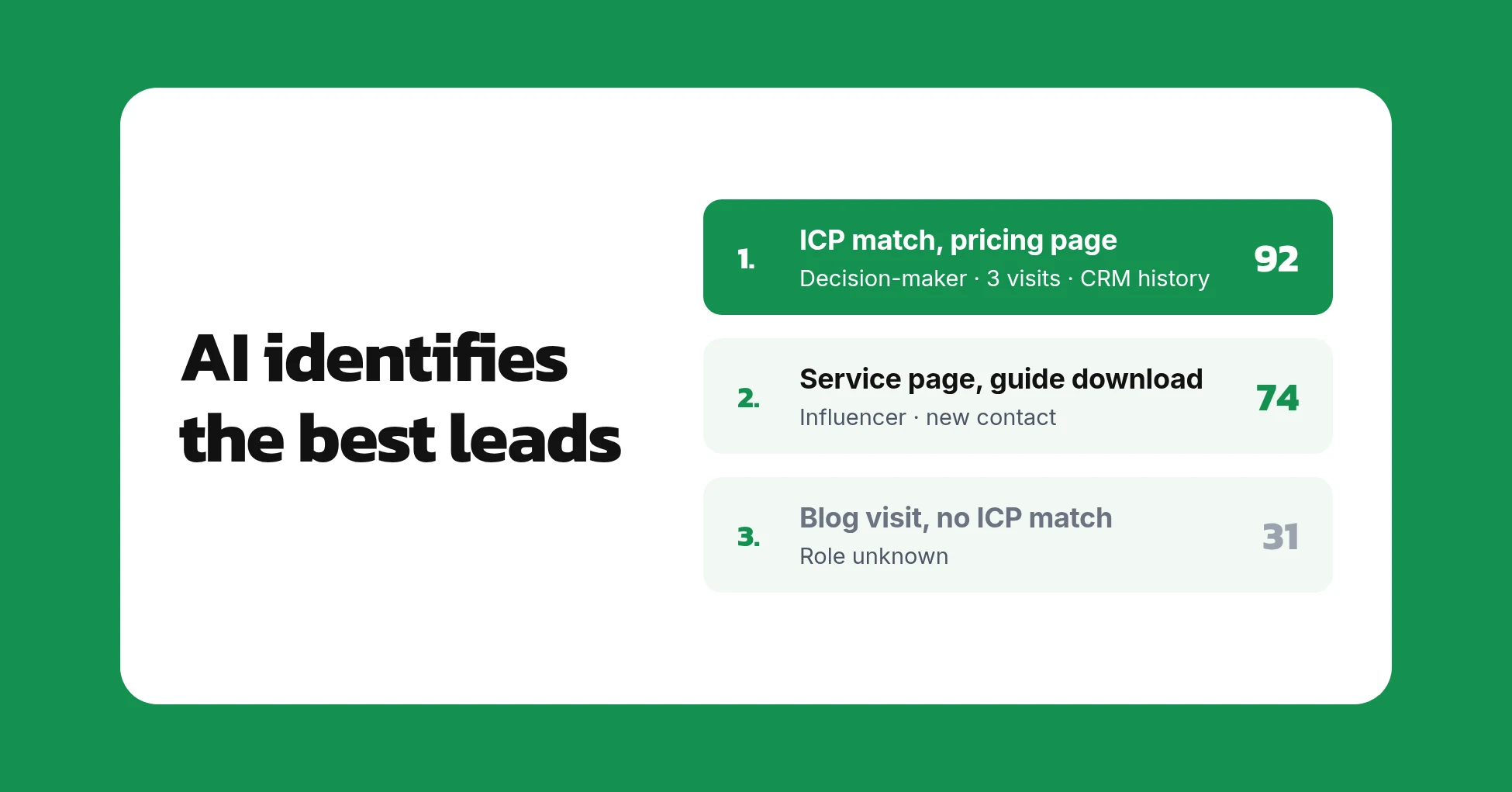
How does AI help sales identify the best leads before the first contact?
AI compiles lead data, identifies signals based on agreed criteria and proposes a justified handling order – so sellers start every conversation prepared.
Execution
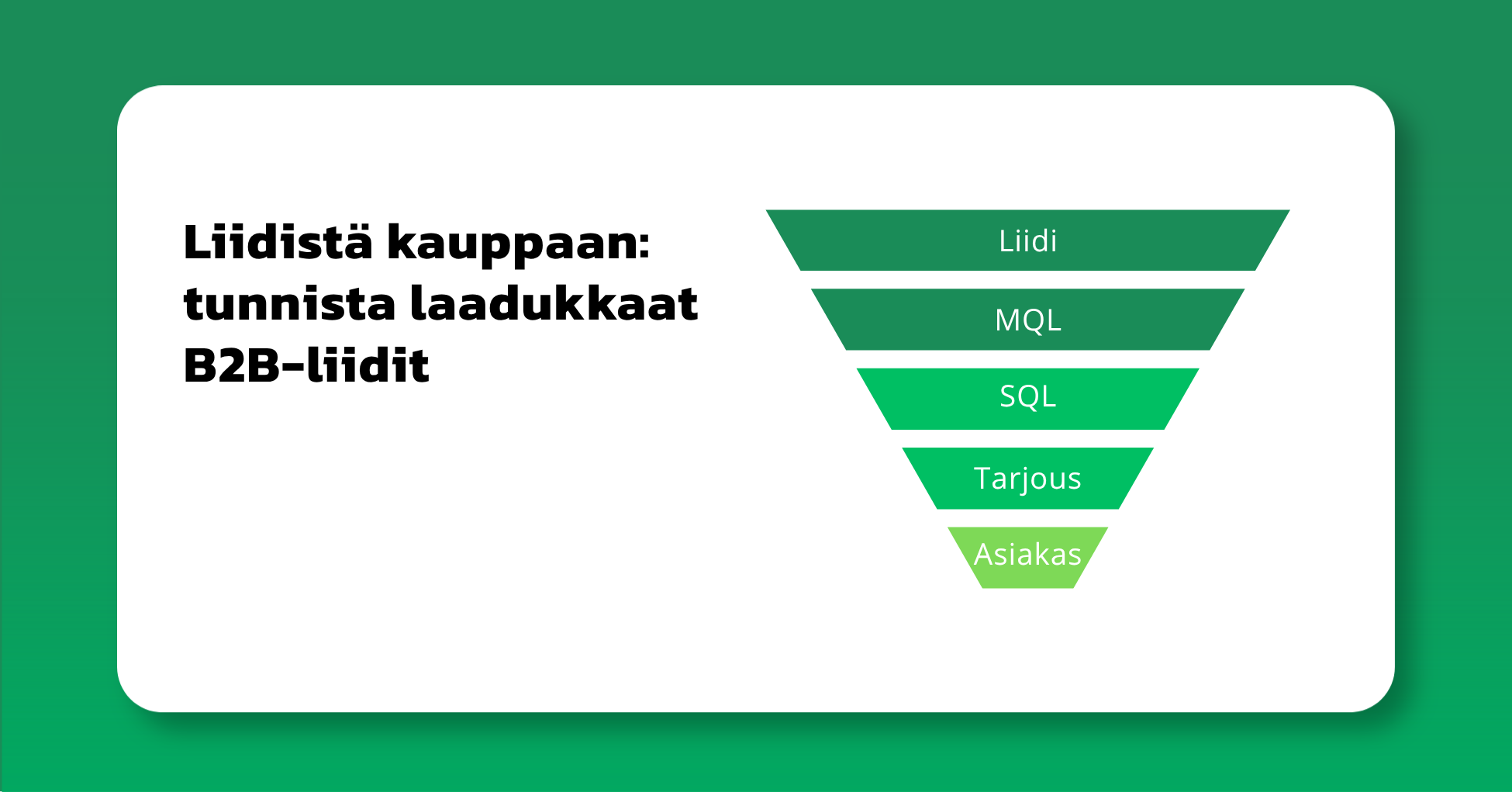
Why lead volume alone is not enough – how to identify high-quality B2B leads
Lead quality determines whether marketing creates real sales opportunities or simply fills the pipeline with the wrong contacts.
Ready to Outpace the Market?
KAIO helps guide sales and marketing with data toward better results.